Art Is Beautiful |

| Featured Artist: Frida Kahlo Take a moment to view the beautiful, wounded deer. |


| This painting never ceases to amaze. Our poor, beautiful Frida shares her own tortured soul and in so doing, reveals our own. |
On a rainy day in September 1925, Frida Kahlo and her boyfriend
Alejandro Gómez Arias were in Mexico City waiting for a bus that
would take them to her home in Coyocán, Mexico. The bus came,
and they climbed on. As Frida and Alejandro chattered about her
plans for medical school, the driver approached a risky intersection
and decided to take his chances. Seconds later, an electric trolley
rammed into the bus, destroying it and launching bodies everywhere.
18 year-old Frida disappeared in this confusion, and Alejandro, also
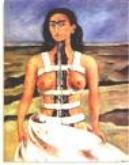
injured, discovered her with a metal pole protruding from her
abdomen. After someone pulled the pole out, an ambulance rushed
her to the hospital, where doctors treated a fractured pelvis, a
dislocated shoulder, two broken ribs, and shattered bones in the right
leg and foot.
This accident was the beginning of an unbearably painful series of
physical ailments that would persist for the rest of Kahlo’s short life.
Only two things would offer solace:
painting and muralist Diego Rivera.
Frida Kahlo was born in 1907 to two Jewish immigrants. A poster
child for Freud’s theories, she adored her father and resented her
mother. The family home in Coyocán, Mexico was painted cobalt
blue outside, and for this reason it became known as the Blue
House. Frida had three sisters, and though her status as daddy’s
favorite set her apart from the others, her affliction with polio
beginning in 1913 would forever mark her as different.
After she healed, Frida was left with a withered right leg that she
covered with pants and long skirts. During her recuperation, her
father lavished attention on his favorite child, who had once been an
energetic tomboy. He helped Frida exercise and, in an attempt to find
ways of entertaining her, he gave his daughter some paints.
Guillermo Kahlo preferred Frida to his other children because she
was the most intelligent. And in 1922, Frida made Guillermo even
prouder when she became one of 35 women from a student body of
2,000 to be admitted to the prestigious National Preparatory School,
or El Prepo, in Mexico City. She wanted to study medicine, but upon
arriving to the vibrant intellectual center of her country, she
discovered political activists, artists, communists, and other people
who dared to dream and question. Lopping off her hair and switching
to overalls from the drab outfits of a good Catholic girl, Frida fell in
with the Cachets, a group of pranksters led by Alejandro Gómez.
One of the Cachets’ victims of trickery was a tall and fat muralist,
Diego Rivera, who was commissioned by the school to paint its
auditorium.
Spunky Frida stopped at nothing to annoy Rivera, 20 years her
senior. She and the Cachets soaped the stairs so Diego would slip
and fall, stole his lunch, and popped water balloons over his head.
Only years later would her taunting and teasing of Diego evolve into
a love affair.
In 1925, Kahlo suffered the bus crash and turned to art during her
recovery. During this period, Alejandro never returned her letters.
After one frustrating year of prolific painting and painful progress, she
encountered Diego again when he was working on a mural in Mexico
City. Summoning him impetuously from his spot high near the roof,
she asked his honest, unflattering opinion of her work. Rivera
inspected her canvas and told her, "Keep it up, little girl." Then he
asked if she had any more, and Kahlo seized the opportunity to invite
him to the Blue House to show off the rest of her work. Critics have
often said that the two artists had a lot in common, with their love of
iconoclasm and Mexico being among the strongest bonds.
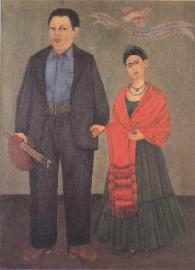
In 1929, when Kahlo was 22 and Rivera 42, the two were married in
the Coyocán courthouse, though Kahlo’s mother did not attend the
wedding because she hoped her daughter could find a more
attractive, conventional match. Kahlo officially retained her own
name, and the newlyweds moved into a stylish house in Mexico City
shared by some other communists. Later that same year, Kahlo
became pregnant, though she had an abortion because her
damaged body could not handle the pregnancy without putting her
own life at risk. Her repeated inability to have children was a source
of pain for Kahlo, who expressed this frustration in her paintings
through the major themes of childbirth, blood and fertility.
In 1930, Kahlo went with her husband to America. During this time,
and for much of her conjugal life with Rivera, Kahlo did not receive
recognition as an artist in her own right. "Wife of the master mural
painter gleefully dabbles in works of art," read one headline when the
couple visited Detroit. Rivera was used to being the center of
attention, and he often neglected Kahlo for his art — not to mention
for numerous extramarital trysts (one of the cruelest affairs Rivera
had was with his wife’s own sister, Cristina).
When Kahlo saw that she was second in line, she abandoned her
own artistic aspirations and became a good housewife, bringing
lunch to Rivera’s workplace and devotedly hanging around him.
Unfortunately, these years proved to be some of Kahlo’s loneliest
and unhappiest.
Though she was good at keeping up appearances, always witty and
charming in public, Kahlo intensely hated America, with its extremes
of poverty and wealth. In addition, her withered right leg also made it
difficult for her to keep up with Diego, as he rushed about from
commission to commission. Nonetheless, Kahlo produced some
great works during this period, specifically her first fantasy or
symbolist paintings, including Self-Portrait on the Border Line.
The couple returned to Mexico in 1933, though not exactly in a state
of marital bliss. Both Kahlo and Rivera had many extramarital affairs
during this time. Among Kahlo’s many lovers — both male and female
— was Leon Trotsky. Exiled from Russia by Stalin, Troktsy and his
wife Natalia Sedova came to stay with Kahlo and Rivera at the Blue
House in 1937 after the Mexican couple had moved back home.
While Sedova and Rivera were in the hospital for various ailments,
friendship, flirtation and ultimately romance grew between the spunky
Kahlo and the older, gallant Trotsky. This romance inspired Kahlo to
paint again, and she dedicated one of her numerous self-portraits to
Trotsky.
In 1938, Kahlo met André Breton, who helped arrange for some
exhibits of her work. After a few minor exhibitions as well as one
major solo exhibit at the Julian Levy Gallery of New York City, word
about Kahlo’s art started to spread. Nickolas Muray, a photographer
and future lover, set up the New York show for her, where she
exhibited 25 paintings. She sold a number of them and returned to
Mexico with jubilance. At 31, she was finally financially independent
and established in her own career.
Art grows out of sacrifice, and Kahlo’s works were no exception.
Rivera once called her art "agonized poetry," and Kahlo’s physical
suffering and emotional loneliness indeed provided material for her
primitivistic, Surrealist paintings. At the core of this agonized poetry
were Kahlo’s unhappiness with and adoration of Rivera. When Kahlo
and Rivera ultimately divorced in 1940, the periods before and after
their separation were among Kahlo’s most difficult and most
productive.
Turning to religious symbolism and themes of death, Kahlo solidified
her position among the Surrealists with continued support from
Breton, though she allegedly denied any affiliation with the
Surrealists. Whatever her official artistic designation, Kahlo was at
last cherished as a respected artist and no longer simply considered
Rivera’s girlish wife.
In the last decade of her life, Kahlo enjoyed a more peaceful
existence, teaching for a while at the renowned Mexican art institute,
La Esmeralda. Assailed by new health problems, this time with her
spinal cord, Kahlo turned to her art as an outlet for her pain. Easel
propped up, she painted directly from the hospital bed. In 1950, she
returned to the Blue House, and a year later she and Rivera
remarried. In 1953, Kahlo and her four poster bed were transported
to Mexico City’s National Institute of Fine Arts for the first solo exhibit
of her work in her homeland.
While Diego Rivera had greatly influenced her life, Kahlo’s distinct
style eliminated any doubts that he might have influenced her art.
Fragile and sensitive, Kahlo developed her own themes, her own
form of fierce nationalism, and her own social consciousness.
When she died in 1957, hundreds of admirers came to see the
diminutive woman of great importance asleep in her coffin, flowers
woven into her hair.
Alejandro Gómez Arias were in Mexico City waiting for a bus that
would take them to her home in Coyocán, Mexico. The bus came,
and they climbed on. As Frida and Alejandro chattered about her
plans for medical school, the driver approached a risky intersection
and decided to take his chances. Seconds later, an electric trolley
rammed into the bus, destroying it and launching bodies everywhere.
18 year-old Frida disappeared in this confusion, and Alejandro, also
injured, discovered her with a metal pole protruding from her
abdomen. After someone pulled the pole out, an ambulance rushed
her to the hospital, where doctors treated a fractured pelvis, a
dislocated shoulder, two broken ribs, and shattered bones in the right
leg and foot.
This accident was the beginning of an unbearably painful series of
physical ailments that would persist for the rest of Kahlo’s short life.
Only two things would offer solace:
painting and muralist Diego Rivera.
Frida Kahlo was born in 1907 to two Jewish immigrants. A poster
child for Freud’s theories, she adored her father and resented her
mother. The family home in Coyocán, Mexico was painted cobalt
blue outside, and for this reason it became known as the Blue
House. Frida had three sisters, and though her status as daddy’s
favorite set her apart from the others, her affliction with polio
beginning in 1913 would forever mark her as different.
After she healed, Frida was left with a withered right leg that she
covered with pants and long skirts. During her recuperation, her
father lavished attention on his favorite child, who had once been an
energetic tomboy. He helped Frida exercise and, in an attempt to find
ways of entertaining her, he gave his daughter some paints.
Guillermo Kahlo preferred Frida to his other children because she
was the most intelligent. And in 1922, Frida made Guillermo even
prouder when she became one of 35 women from a student body of
2,000 to be admitted to the prestigious National Preparatory School,
or El Prepo, in Mexico City. She wanted to study medicine, but upon
arriving to the vibrant intellectual center of her country, she
discovered political activists, artists, communists, and other people
who dared to dream and question. Lopping off her hair and switching
to overalls from the drab outfits of a good Catholic girl, Frida fell in
with the Cachets, a group of pranksters led by Alejandro Gómez.
One of the Cachets’ victims of trickery was a tall and fat muralist,
Diego Rivera, who was commissioned by the school to paint its
auditorium.
Spunky Frida stopped at nothing to annoy Rivera, 20 years her
senior. She and the Cachets soaped the stairs so Diego would slip
and fall, stole his lunch, and popped water balloons over his head.
Only years later would her taunting and teasing of Diego evolve into
a love affair.
In 1925, Kahlo suffered the bus crash and turned to art during her
recovery. During this period, Alejandro never returned her letters.
After one frustrating year of prolific painting and painful progress, she
encountered Diego again when he was working on a mural in Mexico
City. Summoning him impetuously from his spot high near the roof,
she asked his honest, unflattering opinion of her work. Rivera
inspected her canvas and told her, "Keep it up, little girl." Then he
asked if she had any more, and Kahlo seized the opportunity to invite
him to the Blue House to show off the rest of her work. Critics have
often said that the two artists had a lot in common, with their love of
iconoclasm and Mexico being among the strongest bonds.
In 1929, when Kahlo was 22 and Rivera 42, the two were married in
the Coyocán courthouse, though Kahlo’s mother did not attend the
wedding because she hoped her daughter could find a more
attractive, conventional match. Kahlo officially retained her own
name, and the newlyweds moved into a stylish house in Mexico City
shared by some other communists. Later that same year, Kahlo
became pregnant, though she had an abortion because her
damaged body could not handle the pregnancy without putting her
own life at risk. Her repeated inability to have children was a source
of pain for Kahlo, who expressed this frustration in her paintings
through the major themes of childbirth, blood and fertility.
In 1930, Kahlo went with her husband to America. During this time,
and for much of her conjugal life with Rivera, Kahlo did not receive
recognition as an artist in her own right. "Wife of the master mural
painter gleefully dabbles in works of art," read one headline when the
couple visited Detroit. Rivera was used to being the center of
attention, and he often neglected Kahlo for his art — not to mention
for numerous extramarital trysts (one of the cruelest affairs Rivera
had was with his wife’s own sister, Cristina).
When Kahlo saw that she was second in line, she abandoned her
own artistic aspirations and became a good housewife, bringing
lunch to Rivera’s workplace and devotedly hanging around him.
Unfortunately, these years proved to be some of Kahlo’s loneliest
and unhappiest.
Though she was good at keeping up appearances, always witty and
charming in public, Kahlo intensely hated America, with its extremes
of poverty and wealth. In addition, her withered right leg also made it
difficult for her to keep up with Diego, as he rushed about from
commission to commission. Nonetheless, Kahlo produced some
great works during this period, specifically her first fantasy or
symbolist paintings, including Self-Portrait on the Border Line.
The couple returned to Mexico in 1933, though not exactly in a state
of marital bliss. Both Kahlo and Rivera had many extramarital affairs
during this time. Among Kahlo’s many lovers — both male and female
— was Leon Trotsky. Exiled from Russia by Stalin, Troktsy and his
wife Natalia Sedova came to stay with Kahlo and Rivera at the Blue
House in 1937 after the Mexican couple had moved back home.
While Sedova and Rivera were in the hospital for various ailments,
friendship, flirtation and ultimately romance grew between the spunky
Kahlo and the older, gallant Trotsky. This romance inspired Kahlo to
paint again, and she dedicated one of her numerous self-portraits to
Trotsky.
In 1938, Kahlo met André Breton, who helped arrange for some
exhibits of her work. After a few minor exhibitions as well as one
major solo exhibit at the Julian Levy Gallery of New York City, word
about Kahlo’s art started to spread. Nickolas Muray, a photographer
and future lover, set up the New York show for her, where she
exhibited 25 paintings. She sold a number of them and returned to
Mexico with jubilance. At 31, she was finally financially independent
and established in her own career.
Art grows out of sacrifice, and Kahlo’s works were no exception.
Rivera once called her art "agonized poetry," and Kahlo’s physical
suffering and emotional loneliness indeed provided material for her
primitivistic, Surrealist paintings. At the core of this agonized poetry
were Kahlo’s unhappiness with and adoration of Rivera. When Kahlo
and Rivera ultimately divorced in 1940, the periods before and after
their separation were among Kahlo’s most difficult and most
productive.
Turning to religious symbolism and themes of death, Kahlo solidified
her position among the Surrealists with continued support from
Breton, though she allegedly denied any affiliation with the
Surrealists. Whatever her official artistic designation, Kahlo was at
last cherished as a respected artist and no longer simply considered
Rivera’s girlish wife.
In the last decade of her life, Kahlo enjoyed a more peaceful
existence, teaching for a while at the renowned Mexican art institute,
La Esmeralda. Assailed by new health problems, this time with her
spinal cord, Kahlo turned to her art as an outlet for her pain. Easel
propped up, she painted directly from the hospital bed. In 1950, she
returned to the Blue House, and a year later she and Rivera
remarried. In 1953, Kahlo and her four poster bed were transported
to Mexico City’s National Institute of Fine Arts for the first solo exhibit
of her work in her homeland.
While Diego Rivera had greatly influenced her life, Kahlo’s distinct
style eliminated any doubts that he might have influenced her art.
Fragile and sensitive, Kahlo developed her own themes, her own
form of fierce nationalism, and her own social consciousness.
When she died in 1957, hundreds of admirers came to see the
diminutive woman of great importance asleep in her coffin, flowers
woven into her hair.


Copyright © 2008 HouseWife Mafia All Rights Reserved. Unauthorized use prohibited. HouseWifeMafia.com copyright materials may not be reproduced in whole or in part by persons, organizations or corporations without the prior written permission of the Legal Department HouseWifeMafia.com. Housewifemafia.com and all its derivatives have been recognized and documented by the Library of Congress, Copyright Office, Washington D.C. Copyright HouseWife Mafia Media & Publishing. |


| SITE MAP |
| SPEAK YOUR TRUTH in the... HOUSEWIFE MAFIA FORUM GUEST BOOK CHAT ROOM HouseWifeMafia Staff often stops in ! |

| Never miss a thing! Sign up for our free weekly newsletter to treat yourself to a bit of fabulousness every week! We do not sell or share your email address with anyone ever. |

| Show Me everything! The all inclusive SITEMAP |

| HouseWifeMafia.com Sister Sites Ring Owner: HouseWifeMafia.com Site: HouseWifeMafia.com |
||||
 |
 |
 |
 |
 |
| Get Your Free Web Ring by Bravenet.com |
||||


Whether it is the beautiful
that brings to our hearts
the love of truth and justice,
or
whether it is truth
that teaches us how to find
the beautiful in nature
and how to love it,
in either case
art does a noble work.
It drags out the soul from
its everyday shell,
and brings it under the spell
of its own mysterious
and wonderful power,
so that a memory
of this experience
stays with the people,
sustains them
in their daily labors,
and refines their minds.
HELENA MODJESKA, "Women and
the Stage," The World's Congress of
Representative Women
that brings to our hearts
the love of truth and justice,
or
whether it is truth
that teaches us how to find
the beautiful in nature
and how to love it,
in either case
art does a noble work.
It drags out the soul from
its everyday shell,
and brings it under the spell
of its own mysterious
and wonderful power,
so that a memory
of this experience
stays with the people,
sustains them
in their daily labors,
and refines their minds.
HELENA MODJESKA, "Women and
the Stage," The World's Congress of
Representative Women
| Visit our other Frida Kahlo Page |
| Please clicky the stop button if you prefer silence. More Squirrel Nut Zippers selections available below |